What Makes St John's Wood and Regent's Park Two of London's Most Exclusive Addresses
Most conversations about London's wealth start with Mayfair, Knightsbridge and Belgravia. A good number of the most discerning buyers look north of the park instead. St John's Wood and Regent's Park have held a quieter kind of prestige for well over a century, and it tends to appeal to people who have nothing left to prove and simply want to live well.
For the buyer weighing one prime postcode against another, these two neighbourhoods repay a close look. They do not offer the showy grandeur of the central districts. What they offer is space, privacy, greenery on the doorstep, and an architectural pedigree that very few addresses anywhere can match.
An address that draws the world's families
Part of what marks this corner of north-west London out is who it attracts. Some prime districts fill up with investors and pied-à-terre owners. St John's Wood and Regent's Park have always drawn families, and international ones especially.
Two institutions anchor that appeal. The American School in London, near Loudoun Road, makes St John's Wood a natural base for families relocating from New York, the Gulf or Asia who want continuity in their children's schooling alongside a central London home. Lord's stands at the foot of Cavendish Avenue. On a Test match day the whole area takes on a particular life, and the pull of the ground on a certain kind of buyer should not be underestimated.
The result is a community with real roots rather than a district that empties out of season. It is why the finest houses here, on Hamilton Terrace or Avenue Road, tend to change hands between families rather than investors, and why those families, once they settle, so rarely leave. It is also why property for sale in St John's Wood at this level stays so tightly held.
Architecture that cannot be replicated
St John's Wood gives you the village calm. Regent's Park gives you the grand set piece. The terraces that ring the park were designed by John Nash for the Prince Regent in the early nineteenth century, and they rank among the most significant residential architecture in London.
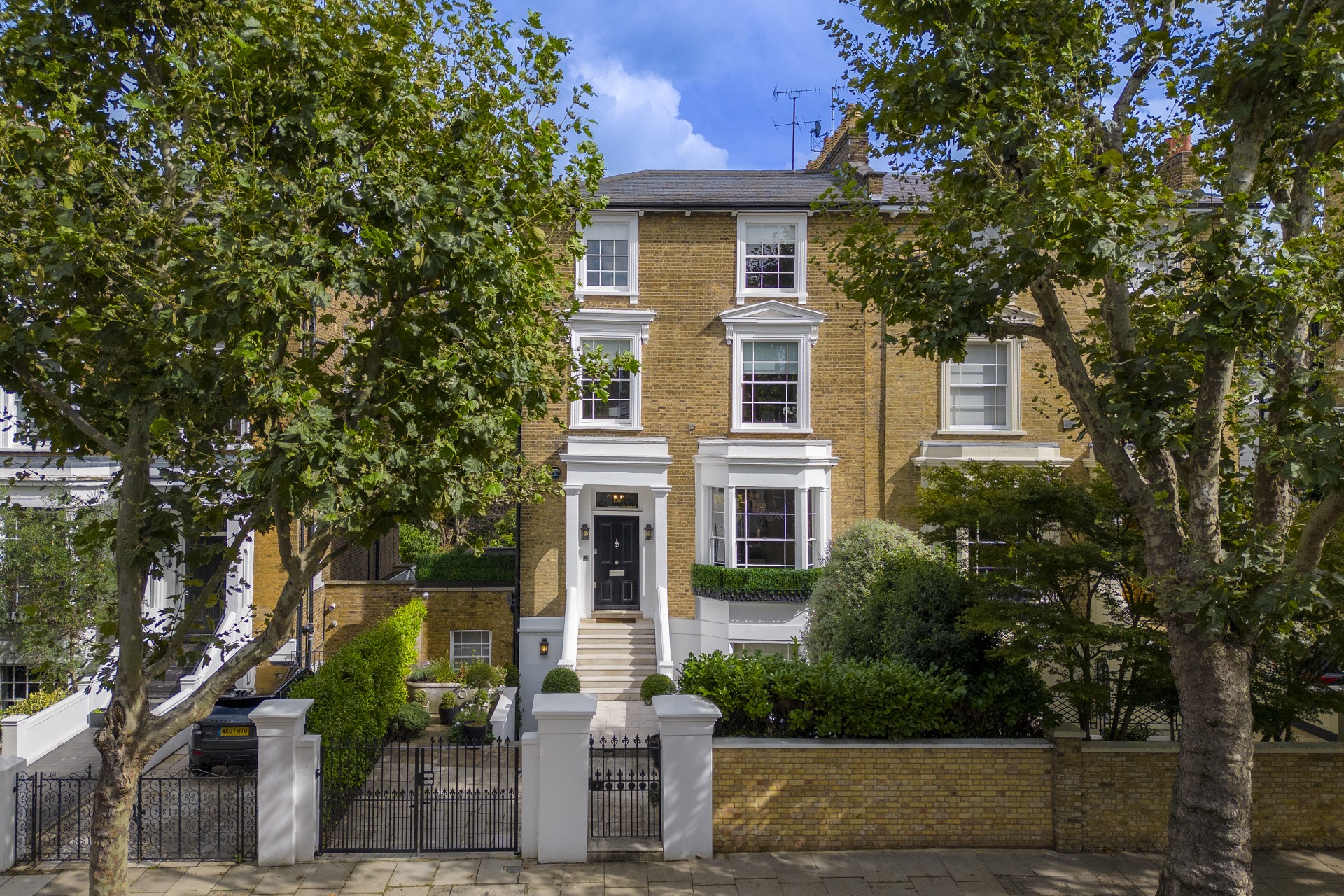
They are not interchangeable, and knowing the differences is what separates admiring the terraces from understanding them. Cornwall Terrace is among the most valuable addresses in the park. Chester Terrace is distinguished by the lifts within its houses, a rare practicality in Regency architecture. Hanover Terrace has its own mews houses set behind small gardens. Under the stewardship of the Crown Estate, none of these can be altered or added to at will. To own here is to hold a piece of the nation's architectural heritage, which resonates with buyers who think in terms of legacy rather than the next few years.
Away from the terraces, much of the appeal is the scale of the houses themselves: substantial villas and family homes with gardens rarely found this close to central London. That mix of architectural distinction and genuine space is what keeps property for sale in Regent's Park among the most sought-after in the capital.
Why buyers choose NW1 over Mayfair or Knightsbridge
For discerning buyers benchmarking these addresses against the traditional prime districts, the comparison comes down to what they value. Mayfair and Knightsbridge offer proximity to the very centre and a certain international cachet. What they rarely offer is a proper garden, a quiet tree-lined street, and room to spread out.
St John's Wood and Regent's Park offer all of that, and usually at a lower price per square foot than their central counterparts. A house on Hamilton Terrace buys a scale, a garden and a stillness that the same money in Mayfair would not begin to buy. That is why a number of buyers who could comfortably purchase in the central districts choose to look here, trading the bustle for something more liveable without stepping down in prestige.
This is worth saying plainly. Choosing north of the park is not settling for less. For many buyers it is the better choice. The homes are larger, the streets greener, the High Street still feels like a village rather than a destination, and the sense of community is real. For anyone whose priority is a home rather than an address to be seen at, it is often the more considered decision.
Two neighbourhoods, one enduring appeal
St John's Wood and Regent's Park share a confidence that does not need to announce itself. They are not competing to be the most expensive postcodes in London, and that is much of the point. They offer space, heritage, privacy and community to buyers who already know what they want.
For the family relocating from abroad, the buyer who values fine architecture, or the person who simply wants room to breathe within reach of central London, few addresses make the argument as quietly and as completely as these two.
St John's Wood and Regent's Park: Your Questions Answered
1. Why are St John's Wood and Regent's Park considered exclusive?
Two things set them apart. Around Regent's Park you have the Nash terraces, protected under the Crown Estate and impossible to replicate. In St John's Wood you have substantial villas on roads like Hamilton Terrace and Avenue Road, with Lord's and the American School close by. Together that gives you space, privacy and heritage that little of central London can offer.
2. Which is better for families, St John's Wood or Regent's Park?
The name is usually credited to the poet Robert Browning, who lived in the area, and to the likeness between its tranquil canals and the waterways of Venice. The pool at the heart of the neighbourhood, Browning's Pool, takes its name from him.
3. How do St John's Wood and Regent's Park compare to Mayfair and Knightsbridge?
You generally get more for your money here: a larger house, a garden, greener streets, and usually a lower price per square foot, without losing prestige. The trade-off is a little less proximity to the very centre, which most buyers who choose NW1 consider a fair one.
4. What is St John's Wood known for?
Lord's Cricket Ground, the American School, Abbey Road around the corner, and the white stucco houses of Hamilton Terrace. More than any single landmark, though, it is known for feeling like a village while sitting minutes from central London.
Why is Regent's Park property so sought after?
The Nash terraces and the park itself. Supply is tightly held under the Crown Estate, the architecture cannot be repeated, and the houses are generously proportioned. Homes here come up rarely, which is much of why they are so prized.
If you are weighing St John's Wood or Regent's Park against other prime London addresses, it is worth speaking to people who know these streets house by house. Our St John's Wood estate agents would be glad to help you find your place here.
Ian Green Residential 020 7586 1000.
Share this Article
Property News and Blog
Read about our latest property news and get our regular property market updates from the team at Ian Green Residential, including specialist market news for Little Venice, Regent’s Park and St John’s Wood.


Useful Links
Accurate, impartial house valuation gives you the means to make better property decisions.
At Ian Green Residential, we are here to assist you with all your property needs. Whether you have a general enquiry, or require a private consultation, our team is ready to help. Contact us today, and let us provide you with the support and information you need!