The Best Streets to Buy in St John's Wood: An Ian Green Guide
St John's Wood is usually talked about as a single address, but anyone who has bought here knows it is really a collection of streets, each with its own character and its own price. The gap between one road and the next can be wide, in money and in the kind of home you end up with.
This guide sets out the best streets to buy in St John's Wood by budget and by the type of house on offer, from the grand villa roads to the family houses of the East Side and the more accessible roads where flats and smaller houses offer a way in. It reflects how the St John's Wood property market actually trades street by street, rather than the averages that tell you little about any individual home.
The villa roads: ultra-prime houses above £8m
These are the roads that define St John's Wood at its grandest. Detached stucco villas on generous plots, the houses that draw international buyers to the area in the first place.
Hamilton Terrace is the benchmark. Hamilton Terrace, St John's Wood is the widest and arguably the finest of these roads, a long tree-lined stretch of white stucco villas running down the west side of the neighbourhood. It has been the area's highest-value address for years, and the houses offer a scale, including room for staff and for entertaining, that little else in central London can match. St Mark's church marks its junction with Abercorn Place, and the road takes its name from a governor of Harrow School.
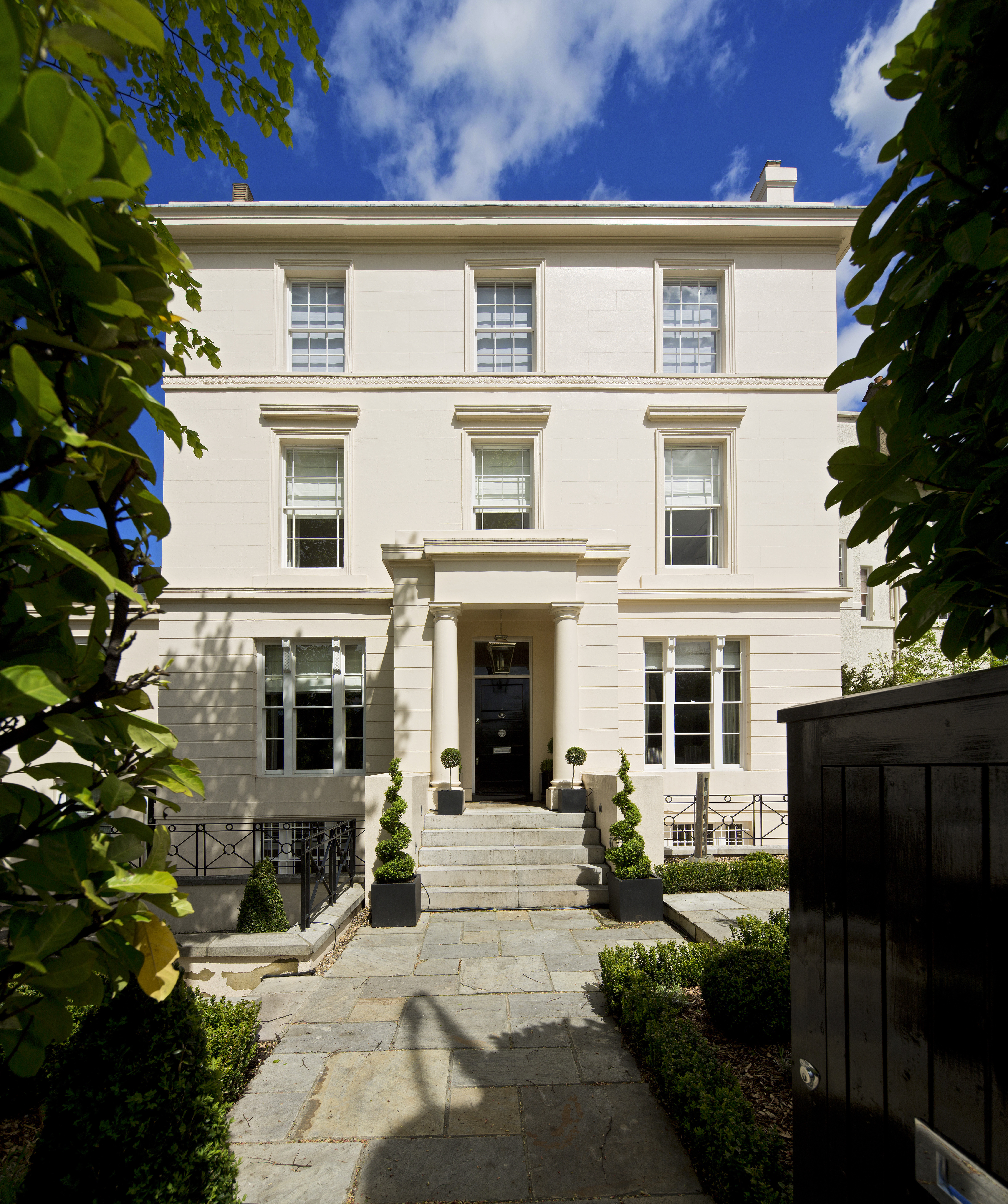
Avenue Road runs along the eastern edge, close to Regent's Park, and holds the largest statement houses in St John's Wood. It has recorded some of the highest residential sale prices in the country, and its ambassadorial-scale villas draw international buyers, including families from the Middle East and Asia. Buyers here are usually looking for a house that makes a statement.
Cavendish Avenue is more private than its scale suggests. The road of grand nineteenth-century mansions runs down towards Lord's at its southern end, and Sir Paul McCartney has kept a house here since 1965. It suits buyers who want ultra-prime space without the exposure of a park-facing address.
The East Side: family houses from around £5m
Norfolk Road, Acacia Road and Queen's Grove sit east of Wellington Road and are known locally as the East Side, the most sought-after family pocket of St John's Wood. They are quieter and more residential than the villa roads, minutes from the High Street and the Jubilee line, and, like much of the area, they sit on the historic Eyre Estate that has shaped St John's Wood since the eighteenth century.
Do not read family houses as modest. These roads run from around £5m for a semi-detached house up to well into eight figures for the largest detached homes. Norfolk Road offers the more accessible entry, with handsome semi-detached houses alongside a few grander detached ones. Acacia Road and Queen's Grove sit at the top end, their substantial detached houses, many arranged over four floors with gardens and off-street parking, regularly priced in eight figures. Houses of that calibre come up rarely, and a good one tends to be held for years.
The way in: more accessible roads below villa prices
St John's Wood is not only a market for multi-million-pound houses. A handful of roads offer flats, conversions and more modestly priced houses for buyers wanting a first foothold in NW8.
Clifton Hill is the pick for many families. Its period semi-detached houses, broadly from around £3.5m, offer genuine space for the money, and the road sits beside Abbey Road on the west side with easy access towards Hampstead. Carlton Hill, alongside it, has a similar mix of period houses and conversions, and its proximity to good schools makes it popular with families settling for the long term.
Abbey Road and Blenheim Terrace are where the flats are. Abbey Road, known worldwide for the studios at number three and the zebra crossing outside, is a working residential street where two-bedroom flats can be found from around £1M. Blenheim Terrace is quieter and largely residential, with period flats and conversions that let buyers into the postcode without the cost of a house. Both are a way in through a flat rather than a villa.
Choosing the right street for you
The value of knowing St John's Wood at this level is that the right street depends entirely on the buyer. A buyer after a landmark villa belongs on Hamilton Terrace or Avenue Road. A family wanting space in a quieter setting is best served on the East Side, where the budget stretches from a semi around £5m to a large, detached house well beyond it. A first purchase in the area is most likely to come on Clifton Hill or through a flat on Abbey Road.
The averages quoted for the St John's Wood property market rarely help with a decision like this, because they flatten out the very differences that matter. What counts is understanding how each road trades, which houses hold their value, and which come up so rarely that they are worth waiting for. That knowledge comes only from working these streets directly. Whatever the budget, the range of property for sale in St John's Wood rewards buyers who know the ground.
The Best Streets in St John's Wood: Your Questions Answered
1. What are the best streets to buy in St John's Wood?
It depends on budget and the kind of home you want. The ultra-prime villa roads are Hamilton Terrace, Avenue Road and Cavendish Avenue, where detached stucco villas run from around £8m upwards. The East Side family roads, Norfolk Road, Acacia Road and Queen's Grove, offer family houses from around £5m up to well into eight figures. For a more accessible entry, Clifton Hill and Carlton Hill have period houses from around £3m, while Abbey Road and Blenheim Terrace offer flats from under £1m.
2. What is the most expensive street in St John's Wood?
Hamilton Terrace and Avenue Road are generally the most prestigious and highest value, known for their large, detached stucco villas. The biggest detached houses on Acacia Road and Queen's Grove also trade well into eight figures.
3. Is St John's Wood a good place to buy property?
Yes, for buyers who want space, greenery and a village feel within reach of central London. The area is favoured by families and international buyers, and houses here tend to be held for years, which keeps good stock relatively scarce.
4. How much does a house cost in St John's Wood?
It varies enormously by street and by house. Flats on Abbey Road or Blenheim Terrace start from around £1M, period houses on Clifton Hill from around £3m, and family houses on the East Side from around £5m up to well into eight figures. The ultra-prime villas on Hamilton Terrace and Avenue Road reach considerably more. Any single average across the area tells you little about a specific house.
Why is Hamilton Terrace so sought after?
Hamilton Terrace is the widest and grandest road in St John's Wood, lined with substantial white stucco villas. Its scale, with room for staff and for entertaining, and its long standing as the area's premier address make it one of the most prized streets in prime London.
If you are working out which street suits your budget and the way you want to live, that is exactly the conversation we are here for. Our estate agents in St John's Wood know these roads house by house.
Ian Green Residential 020 7586 1000.
Share this Article
Property News and Blog
Read about our latest property news and get our regular property market updates from the team at Ian Green Residential, including specialist market news for Little Venice, Regent’s Park and St John’s Wood.


Useful Links
Accurate, impartial house valuation gives you the means to make better property decisions.
At Ian Green Residential, we are here to assist you with all your property needs. Whether you have a general enquiry, or require a private consultation, our team is ready to help. Contact us today, and let us provide you with the support and information you need!